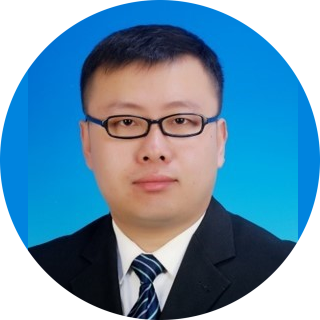
2026 Keynote Speaker / 主旨报告
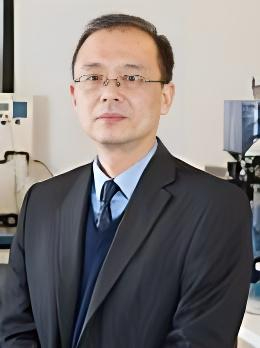
Prof. Kang Li
University of Leeds, UK
H-index 68, Director of the Institute of Communication and Power Networks
Speech Title: Intelligent State Estimation and Control of Battery Storage Systems to Support Transport Decarbonization
Abstract (Click to view / 点击查看)
The global economy will be greatly shaped by the transformed energy landscapes. Battery storage systems play a vital role in decarbonizing the whole energy chain from accepting renewable generations to electrification of transport and other sectors. The talk presents some recent studies in intelligent state estimation and control of Li-ion battery systems and substantial engineering applications to support railway and road electrification/decarbonization.
BIO: Kang Li holds the Chair of Smart Energy Systems and is the Director of the Institute of Communication and Power Networks at School of Electronic and Electrical Engineering, University of Leeds. A control engineer by training, he is interested is in the development of holistic sensing, modelling, control, and optimization systems to support low carbon transition of power, transport and manufacturing sectors. His work on the development of minimal-invasive cloud-based energy consumption and process condition monitoring platform (Point Energy Technology) has been successfully adopted in food processing and polymer processing industries, winning 2015 Institute of Measurement and Control ICI Best Application prize, 2016 Northern Ireland INVENT award and 2016 finalist of the Sustainable Energy Awards 2016 from Sustainable Energy Authority of Republic of Ireland. In battery research, he has proposed constrained multi-objective battery charging control strategies for batteries and promoted the application of Fibre Bragg Grating sensor technologies for battery state monitoring and estimation to improve battery safety and state estimation accuracy. In partnership with leading industrial partners in the power and transport sectors, he is currently leading the technological innovation on the development and demonstration of railway Energy Hubs, a first of the kind novel microgrid solution to revolutionize railway decarbonization, transforming the inflexible rail demand to flexible load, and providing flexibility and ancillary services to the power grid. Prof Li has published over 300 international journal papers and edited 19 international conference proceedings in his area, winning over 15 national and international prizes and awards, including 2019 Springer Nature ‘China New Development Award’ in recognition of the ‘exceptional contributions to the delivery of the UN Sustainable Development Goals’.
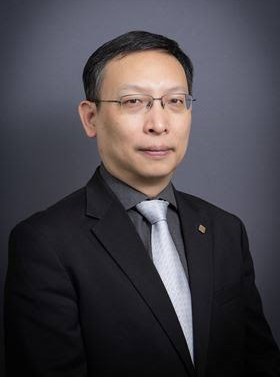
Prof. Zhao Xu
The Hong Kong Polytechnic University, Hong Kong, China
H-index 71, Chairman of the IEEE Hong Kong Joint Chapter of PES/IELS/IAS/PELS
Speech Title: Low-Carbon Transition and Resilience Evolution of Modern Power Systems under Climate Change
Abstract (Click to view / 点击查看)
To mitigate climate change, electric power systems are undergoing a rapid low-carbon transition with increasing integration of renewable and other weather-sensitive energy resources. However, the growing dependence of power systems on weather and climate conditions introduces new challenges to secure and resilient electricity supply, particularly under extreme weather events. This presentation provides an overview of the low-carbon transition of modern power systems and discusses the emerging climate risks associated with this transformation. It first introduces the concept of power system resilience and highlights the limitations of conventional reliability-oriented approaches in addressing high-impact extreme events. Recent advances in short-term resilience assessment are then presented, with a focus on integrating meteorological nowcasting, spatial downscaling, and data-driven power system analysis to support rapid assessment under imminent extreme weather. Beyond individual extreme events, the presentation further discusses the evolution of power system resilience under long-term climate change. In particular, long-horizon resilience is introduced as an integrated property emerging from the co-evolution of climate and power systems. Finally, key research prospects are discussed.
BIO: Prof. Zhao Xu received the B.Eng. degree from Zhejiang University, Hangzhou, China, in 1996, the M.Eng. degree from the National University of Singapore, Singapore, in 2002, and the Ph.D. degree from The University of Queensland, Brisbane, QLD, Australia, in 2006, all in electrical engineering. From 2006 to 2010, he was an Assistant and then an Associate Professor with the Department of Electrical Engineering, Technical University of Denmark, Kongens Lyngby, Denmark. Since 2010, he has been with The Hong Kong Polytechnic University, Hong Kong, where he is currently a Professor with the Department of Electrical Engineering and the Leader of Smart Grid Research Area. He is also a foreign Associate Staff of the Centre for Electric Technology, Technical University of Denmark. His research interests include smart grid, renewable energy, and applications of AI and big data analytics. He has extensive research project experiences involving collaborations with academia, industrial, and business sectors. Prof. Xu was the recipient of several awards for research excellence, including the 2017 State Award in Nature Science from MOE, China. He is currently the Chairman of the IEEE Hong Kong Joint Chapter of PES/IELS/IAS/PELS. He has served/is serving as an editor for a number of IEEE Transactions and IET journals.
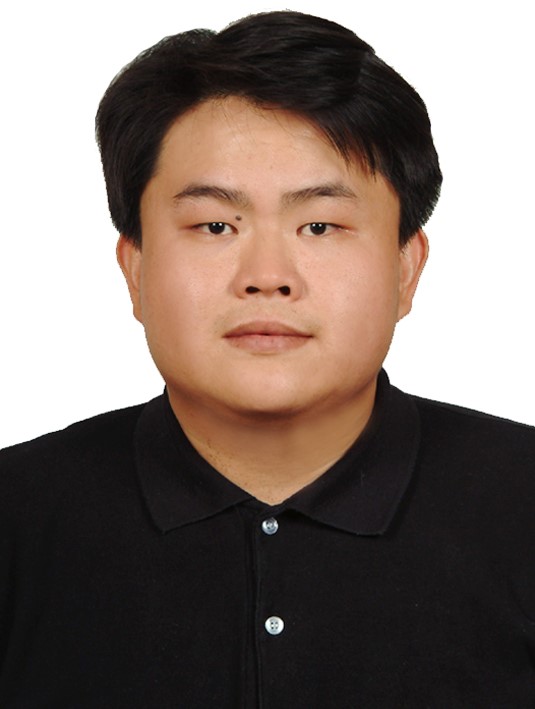
Prof. Rong-Jong Wai
National Taiwan University of Science and Technology, Taiwan, China
H-index 59, IET Fellow
Speech Title: Digital twin-based energy management system for solar photovoltaic power and load demand forecasting with economic benefit verification
Abstract (Click to view / 点击查看)
Accurate forecasting of photovoltaic (PV) generation and electric load is essential for digital-twin-based smart-grid energy management. This study develops an integrated forecasting framework using public meteorological data, task-specific deep-learning models, and adaptive online learning. For PV forecasting, a combination of Pearson correlation coefficient (PCC)-based feature selection, a long short-term memory (LSTM) encoder, and a bidirectional LSTM (BiLSTM) predictor are integrated, reducing hourly and daily forecasting errors by 39.7% and 27.3%, respectively. Online learning further reduces errors by 50.8% in cross-site deployment and 66.9% in long-term deployment, with a maximum single-day improvement of 78%. For load forecasting, a missing-data-aware gated-recurrent-unit with decay mechanism (GRU-D)-temporal convolutional network (TCN)-BiLSTM model incorporates historical loads, missing-data information, meteorological variables, and temporal features. Sparrow search algorithm (SSA)-based optimization reduces training time by 28.71%, while forecasting errors are reduced by 5.13%–29.86% compared with benchmark models. Online learning further achieves error reductions of 15.34% and 60.71% under temporal and cross-region shifts, respectively. Finally, the integrated forecasts are applied to net-load-aware energy management. With 20% controllable load, the monthly electricity cost decreases from USD 69,422 to USD 64,444, saving USD 4,978 (7.17%), while the contracted-capacity exceedance duration is reduced from 49 h to 4 h. These results demonstrate the effectiveness of adaptive PV and load forecasting for practical energy management.
BIO: Rong-Jong Wai was born in Tainan, Taiwan, in 1974. He received the B.S. degree in electrical engineering and the Ph.D. degree in electronic engineering from Chung Yuan Christian University, Chung Li, Taiwan, in 1996 and 1999, respectively. From August 1998 to July 2015, he was with Yuan Ze University, Chung Li, Taiwan, where he was the Dean of General Affairs from August 2008 to July 2013, and the Chairman of the Department of Electrical Engineering from August 2014 to July 2015. Since August 2015, he has been with National Taiwan University of Science and Technology, Taipei, Taiwan, where he was the Dean of General Affairs from August 2018 to January 2021, and he is currently a Distinguished Professor, and the Director of the Energy Technology and Mechatronics Laboratory. He has authored more than 195 conference papers, over 210 international journal papers, and 63 inventive patents. His research interests include power electronics, motor servo drives, mechatronics, energy technology, and control theory applications. The outstanding achievement of his research is for contributions to real-time intelligent control in practical applications and high-efficiency power converters in energy technology. He is a fellow of the Institution of Engineering and Technology (U.K.) and a senior member of the Institute of Electrical and Electronics Engineers (U.S.A.).
APET Previous Distinguished Keynote Speakers

Fellow of IEEE, IET, IEAust, AAIA

Fellow of IEEE
Fellow of IEEE, IET
Fellow of IEEE

Fellow of IEEE

Fellow of IEEE, IET

H-index: 89
Fellow of IET

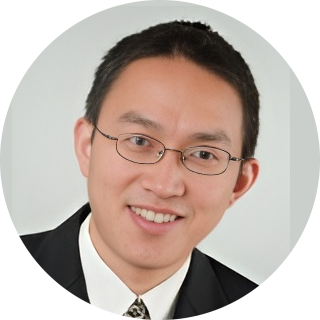
Fellow of IEEE, Changjiang Scholar
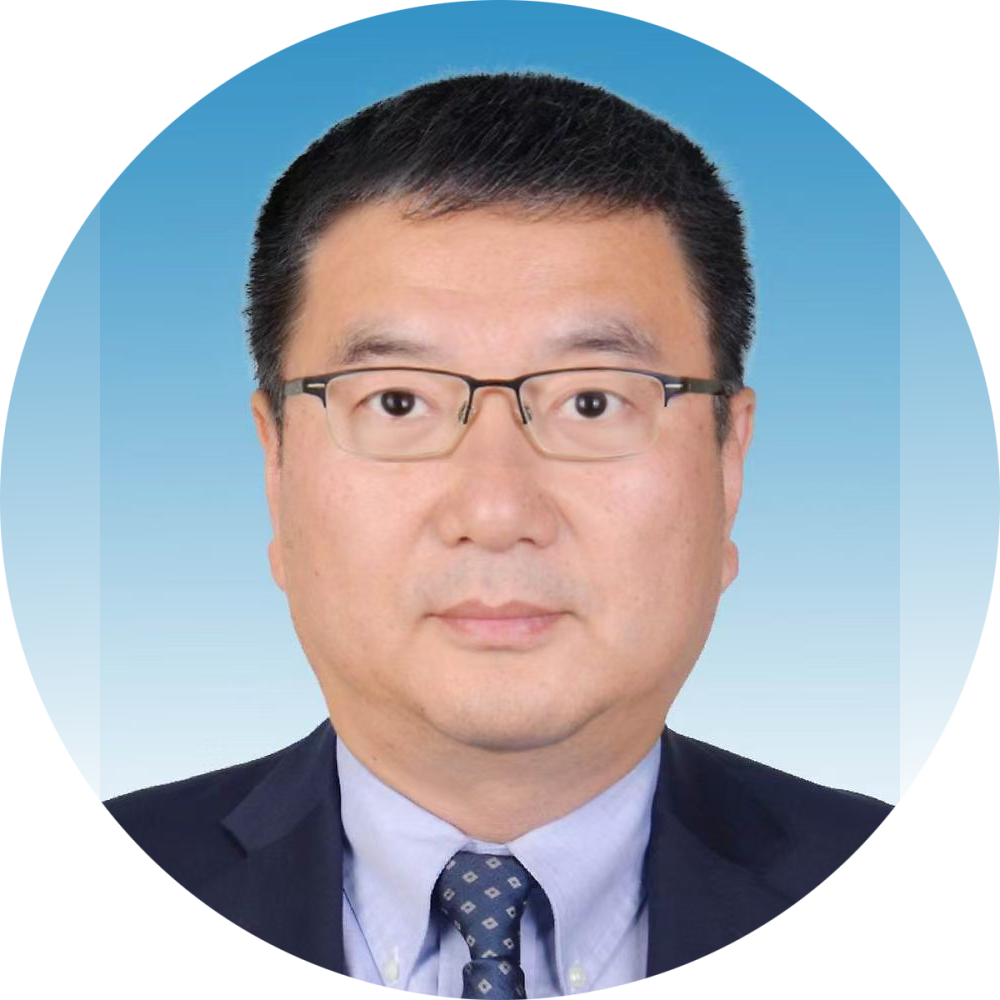
IET Fellow, IEEE Senior Member